Anti-Collision Warning System (ACS)
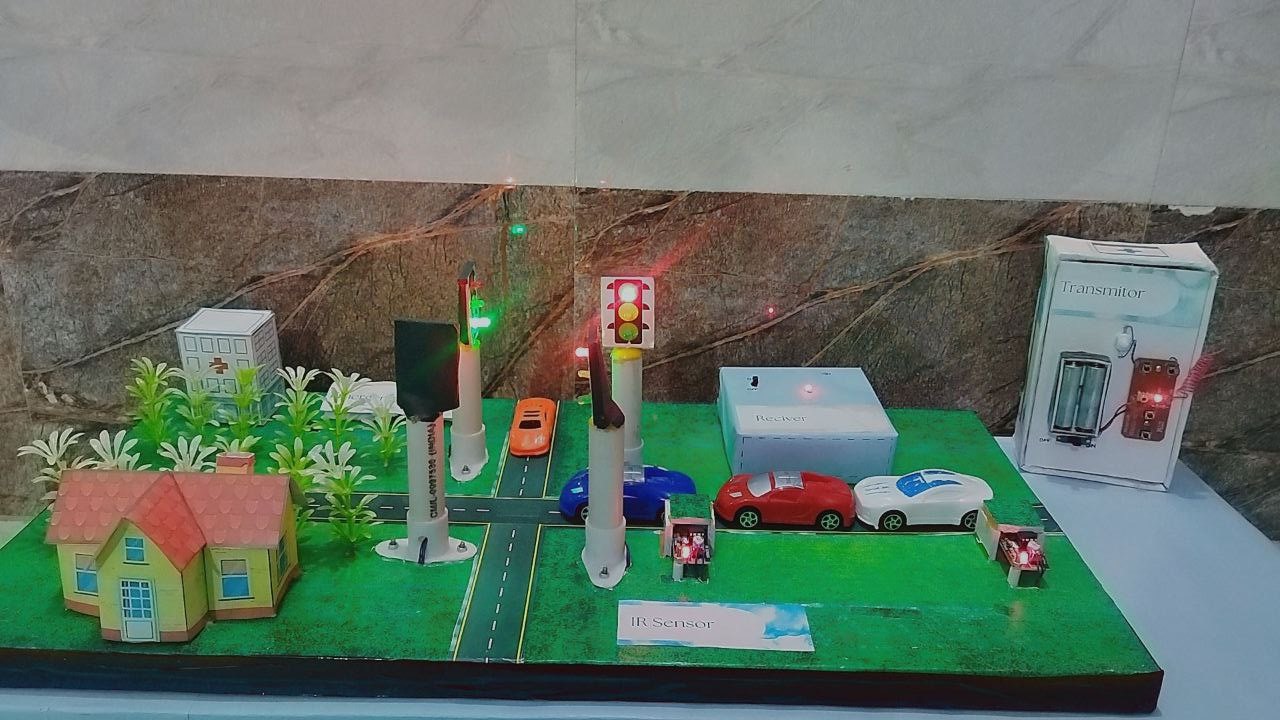
An Arduino-based collision avoidance system designed to enhance road safety on hazardous sections like mountain turns and blind spots. Using IR sensors and a relay module, the system detects oncoming vehicles in real-time and triggers visual warning alerts — preventing head-on collisions before they happen.
Key Features
Real-Time Vehicle Detection
IR sensors placed on both sides of a blind turn detect approaching vehicles instantly, even around corners.
Visual Warning Alerts
When a vehicle is detected, the relay triggers bright warning LEDs on both sides of the turn to alert drivers.
Relay-Based Switching
A relay module bridges the low-power Arduino output to control high-power warning lights reliably.
Mountain Turn Focused
Specifically designed for sharp blind curves and mountain roads where traditional signage fails to prevent accidents.
Instant Response
Detection-to-alert latency is near-zero — the system reacts in milliseconds, giving drivers maximum reaction time.
Low-Cost & Scalable
Built entirely from affordable components — Arduino, IR LEDs, and a relay module — making it easy to deploy at scale.
Problem & Solution
⚠️ The Problem
Accidents on hazardous road sections — especially sharp turns and blind spots — pose a significant threat to road safety. Traditional warning systems rely on static signage, which cannot respond to real-time traffic and fails to prevent accidents caused by sudden hazards or driver distraction.
✅ The Solution
The ACS provides real-time dynamic alerts using infrared sensors and intelligent relay switching. When a vehicle is detected approaching from the other side of a blind turn, the system immediately activates visual warnings on both sides — prompting drivers to slow down and avoid a collision.
System Architecture
- Arduino Uno — central controller running the detection and alert logic
- IR Sensor (x2) — one placed on each side of the blind turn for bidirectional detection
- Relay Module — switches warning lights on/off based on Arduino signal output
- Warning LEDs — bright visual alerts activated on vehicle detection
- Detection Algorithm — if either sensor is triggered, both sides are alerted simultaneously
My Role in the Project
- Designed and built the physical mountain road model with tunnel and terrain
- Wired and integrated IR sensors with the Arduino Uno controller
- Implemented the relay switching logic for warning light activation
- Tested and calibrated sensor sensitivity for reliable vehicle detection range
- Collaborated on the technical documentation and competition presentation
Project Presentation
Full slide deck covering the ACS system design, problem statement, components used, and implementation strategy.
Open Full Presentation (PDF) ↗